mirror of
https://github.com/supabase/supabase.git
synced 2026-10-05 01:15:03 +03:00
 635b2d6050
## I have read the CONTRIBUTING.md file. YES ## What kind of change does this PR introduce? This PR helps standardise link sections which is useful for overview pages that frequently use similar sections such as "Next steps", "Get started", or "Examples". Six high-traffic overview pages are migrated as a pilot, with a skill in the new [supabase/docs-agent-skills](https://github.com/supabase/docs-agent-skills) repo to audit and convert the rest in a follow-on PR. Refactored from an initial YAML front matter approach per review feedback from @jeremenichelli. Now implemented as a React component and using existing linting & Markdown export functionality. A second round of review feedback further simplified the architecture: the per-listing component registry was removed in favor of a single `<ContentListings id="..." />` component backed by an ID-keyed data lookup, the listing data moved out of `apps/docs/components/` into `apps/docs/data/content-listings/`, the listing-specific link wrapper was replaced with the existing `<Link>` + `<GlassPanel>` pattern from the rest of the docs, and the headings now defer to the shared `<Heading>` from `MdxBase.shared.tsx` (no parallel marker-to-tag mapping, no typography overrides). Great feedback, thank you! 🙏 Relates to DOCS-1032. ## What is the current behavior? Authors implement these sections however they wish. As a result, overview and index pages use inconsistent patterns for orientation links: some use hand-rolled Markdown lists, some use custom panel/grid components, some use buttons, and some have no guidance about where to go next at all. There is no shared component for these sections and no analytics on those clicks. ## What is the new behavior? Authors add orientation sections in two steps: 1. Define listing data in a `.data.ts` file under `apps/docs/data/content-listings/` (for example, `storage.data.ts`). Each `ContentListingGroup` has a globally-unique `id` like `storage-get-started`. 2. Place a single `<ContentListings id="..." />` component inline in guide MDX. The ID is also the telemetry `listingId`, so the same value disambiguates the section in PostHog dashboards. Grid and list layouts, optional icons (such as `/docs/img/icons/github-icon` with `-light.svg` variants for dark mode), and external URLs are supported. Conditionals that use `$Show` around inline components are also supported, for example for auth pricing. ### Usage example from "Storage" overview page `apps/docs/data/content-listings/storage.data.ts`: ```ts export const storageGetStarted: ContentListingGroup = { id: 'storage-get-started', heading: 'Get started', description: 'Choose the bucket type that fits your use case:', type: 'grid', items: [ { title: 'Files buckets', href: '/guides/storage/quickstart', description: 'Store and serve images, videos, documents, and general-purpose files with direct URL access and row-level security.', }, { title: 'Analytics buckets', href: '/guides/storage/analytics/introduction', description: 'Store data in Apache Iceberg tables for data lakes, logs, and ETL. Query from Postgres via foreign tables with partitioning.', }, { title: 'Vector buckets', href: '/guides/storage/vector/introduction', description: 'Store embeddings and run similarity search for semantic matching, AI, and RAG. Use HNSW indexing, distance metrics, and metadata filtering.', }, ], } ``` `apps/docs/content/guides/storage.mdx`: ```mdx <ContentListings id="storage-get-started" /> ``` Renders as: <img width="689" alt="Storage Get started listing — Files, Analytics, and Vector buckets" src="https://github.com/user-attachments/assets/0d1b9531-962f-40ae-891e-b1e93ff1c939" /> <br>Exported in Markdown as: ```md ## Get started Choose the bucket type that fits your use case: - **[Files buckets](/docs/guides/storage/quickstart):** Store and serve images, videos, documents, and general-purpose files with direct URL access and row-level security. - **[Analytics buckets](/docs/guides/storage/analytics/introduction):** Store data in Apache Iceberg tables for data lakes, logs, and ETL. Query from Postgres via foreign tables with partitioning. - **[Vector buckets](/docs/guides/storage/vector/introduction):** Store embeddings and run similarity search for semantic matching, AI, and RAG. Use HNSW indexing, distance metrics, and metadata filtering. ``` Click tracking fires via PostHog (`docs_content_listing_clicked`): ```json { "action": "docs_content_listing_clicked", "custom_properties": { "targetPath": "/guides/storage/quickstart", "linkTitle": "Files buckets", "groupTitle": "Get started", "listingId": "storage-get-started" } } ``` Still finding my way around PostHog, but I verified on preview deploy that clicking a content listing on `/docs/guides/auth` sends `docs_content_listing_clicked` to `https://api.supabase.green/platform/telemetry/event` and receives HTTP 201. ### Authoring experience Three ways to add or convert content listings: copy the agent prompt first, use snippets for manual edits, or invoke the audit skill for batch follow-on work. Refer to `CONTRIBUTING.md` for the full authoring guide. #### 1. Agent prompt Copy into Cursor or another AI assistant: ```text Add a content listing block for [TOPIC] / [SECTION] (for example, Storage / Examples). Follow CONTRIBUTING § Content listings in apps/docs. - Add data to apps/docs/data/content-listings/[topic].data.ts - Use a globally-unique kebab-case id like `[topic]-[section]` - Place inline in the guide MDX with <ContentListings id="..." /> - Copy structure from storageGetStarted in apps/docs/data/content-listings/storage.data.ts - Run pnpm test:local lib/content-listings.test.ts from apps/docs ``` #### 2. VS Code / Cursor snippets Type these prefixes in the docs workspace (`.vscode/content-listing.code-snippets`): | Prefix | Inserts | | ----------- | -------------------------------------------------------- | | `cl-data` | `ContentListingGroup` export skeleton with namespaced id | | `cl-inline` | `<ContentListings id="…" />` in guide MDX | <img width="658" height="274" alt="image" src="https://github.com/user-attachments/assets/5ef20954-7aee-4925-887d-79a5ae766b37" /> #### 3. Batch audit skill For follow-on overview page conversion or maintenance, use the [`audit-content-listings`](https://github.com/supabase/docs-agent-skills/blob/main/.claude/skills/audit-content-listings/SKILL.md) skill in `docs-agent-skills` (skill, `conversion-manifest.json`, and validation script). Example: ```text Use audit-content-listings. Audit getting-started.mdx, update conversion-manifest.json, then convert the next unconverted section only. ``` ## Additional context The implementation includes a presentational `<ContentListings />` component (grid/list layouts, GlassPanel, telemetry) backed by ID-keyed data modules, and a single markdown export handler that reads the same `id` prop from the JSX and looks up data via the shared registry. Key files: - **Data:** `apps/docs/data/content-listings/` (one `.data.ts` file per guide topic, plus `index.ts` exporting `CONTENT_LISTINGS` and `getContentListingById`) - **Renderer:** `apps/docs/components/ContentListings/` (single `<ContentListings id="…" />` component); registered in `apps/docs/features/docs/MdxBase.shared.tsx` - **Types/helpers:** `apps/docs/lib/content-listings.schema.ts` (zod schemas, type aliases, grid/heading/href helpers) - **Markdown export:** `apps/docs/internals/markdown-schema/Listings.ts` (single ID-driven handler) wired into `apps/docs/internals/generate-guides-markdown.ts` - **Telemetry:** `docs_content_listing_clicked` defined in `packages/common/telemetry-constants.ts`, fired from `ContentListings.client.tsx` - **Authoring guide:** `apps/docs/CONTRIBUTING.md` (Components and elements → Content listings) - **VS Code snippets:** `.vscode/content-listing.code-snippets` (`cl-data`, `cl-inline`) ### Before & After #### Auth | [Before (production)](https://supabase.com/docs/guides/auth) | [After (preview)](https://docs-git-fork-nrichers-nikrichers-docs-1032-sta-e2a8cb-supabase.vercel.app/docs/guides/auth) | | --------------------------------------------------------------------------------------------------------------------------- | --------------------------------------------------------------------------------------------------------------------------- | | 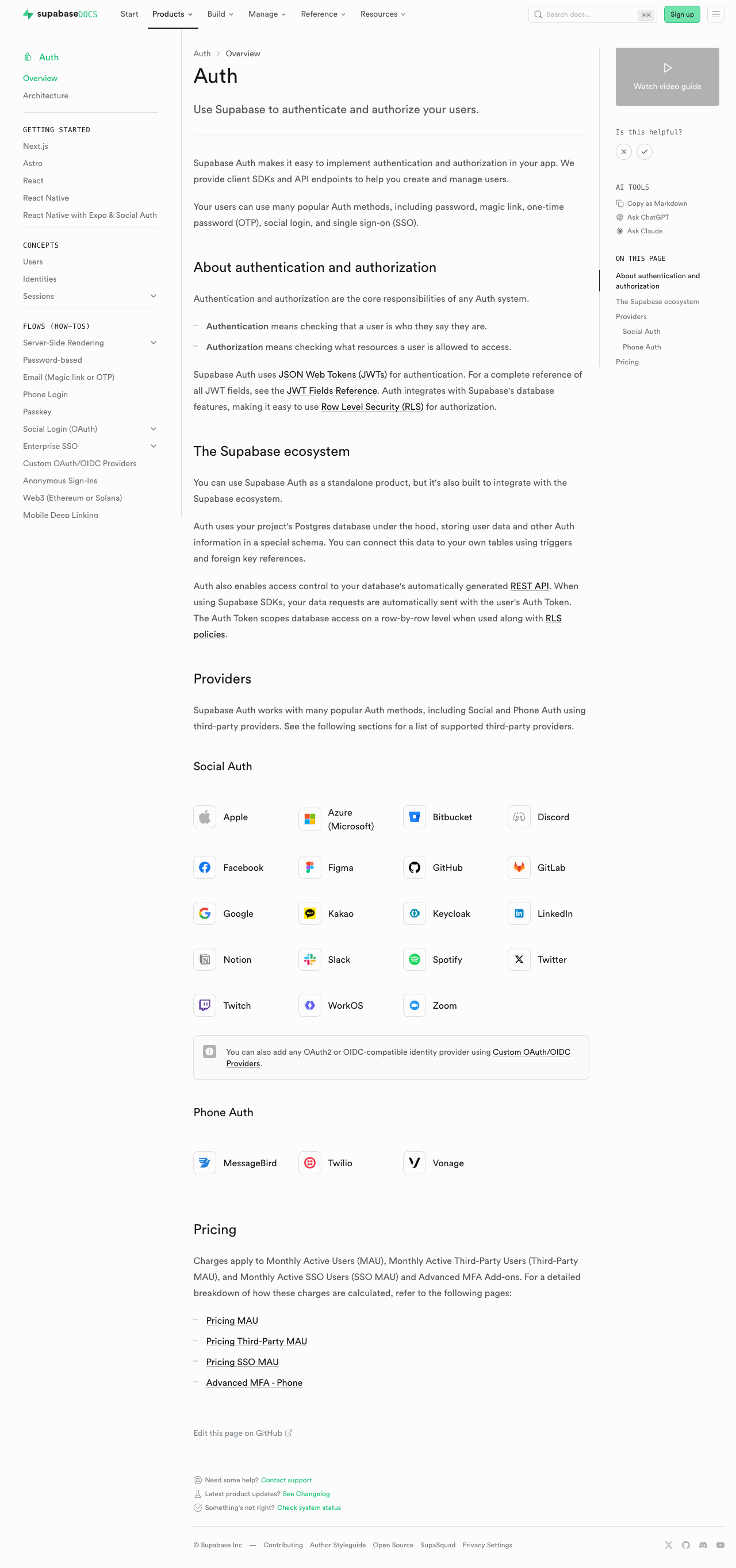 | 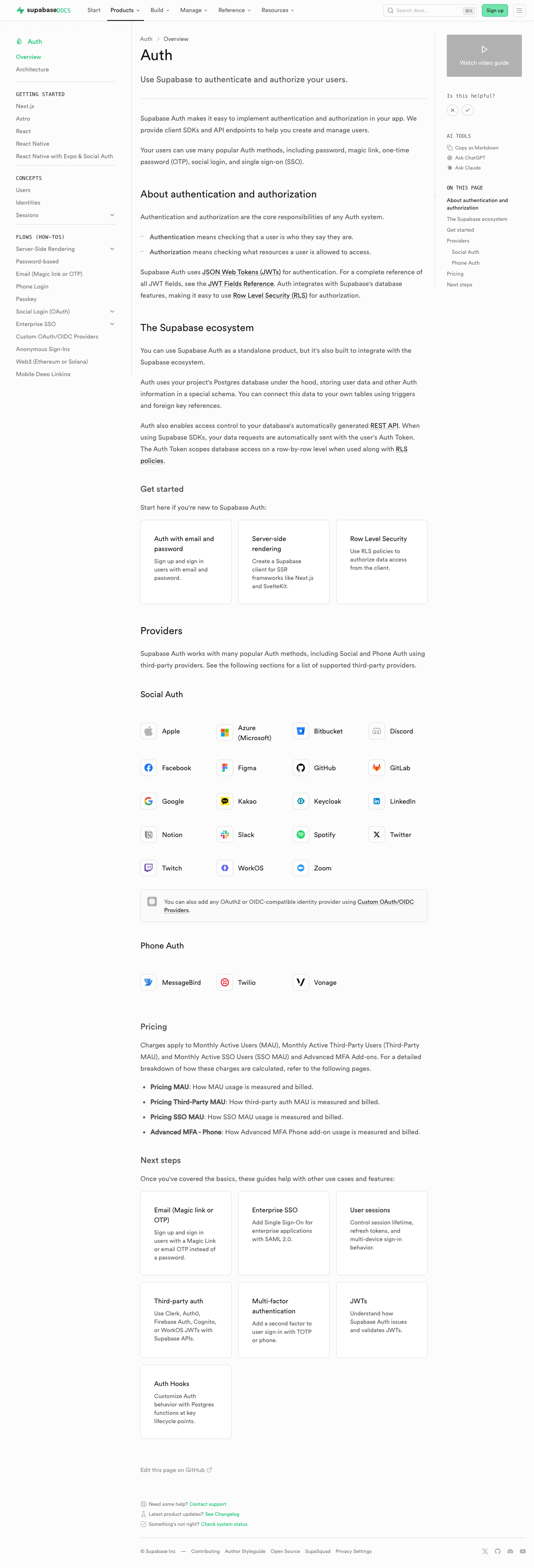 | #### Database overview | [Before (production)](https://supabase.com/docs/guides/database/overview) | [After (preview)](https://docs-git-fork-nrichers-nikrichers-docs-1032-sta-e2a8cb-supabase.vercel.app/docs/guides/database/overview) | | -------------------------------------------------------------------------------------------------------------------------------------------------- | -------------------------------------------------------------------------------------------------------------------------------------------------- | | 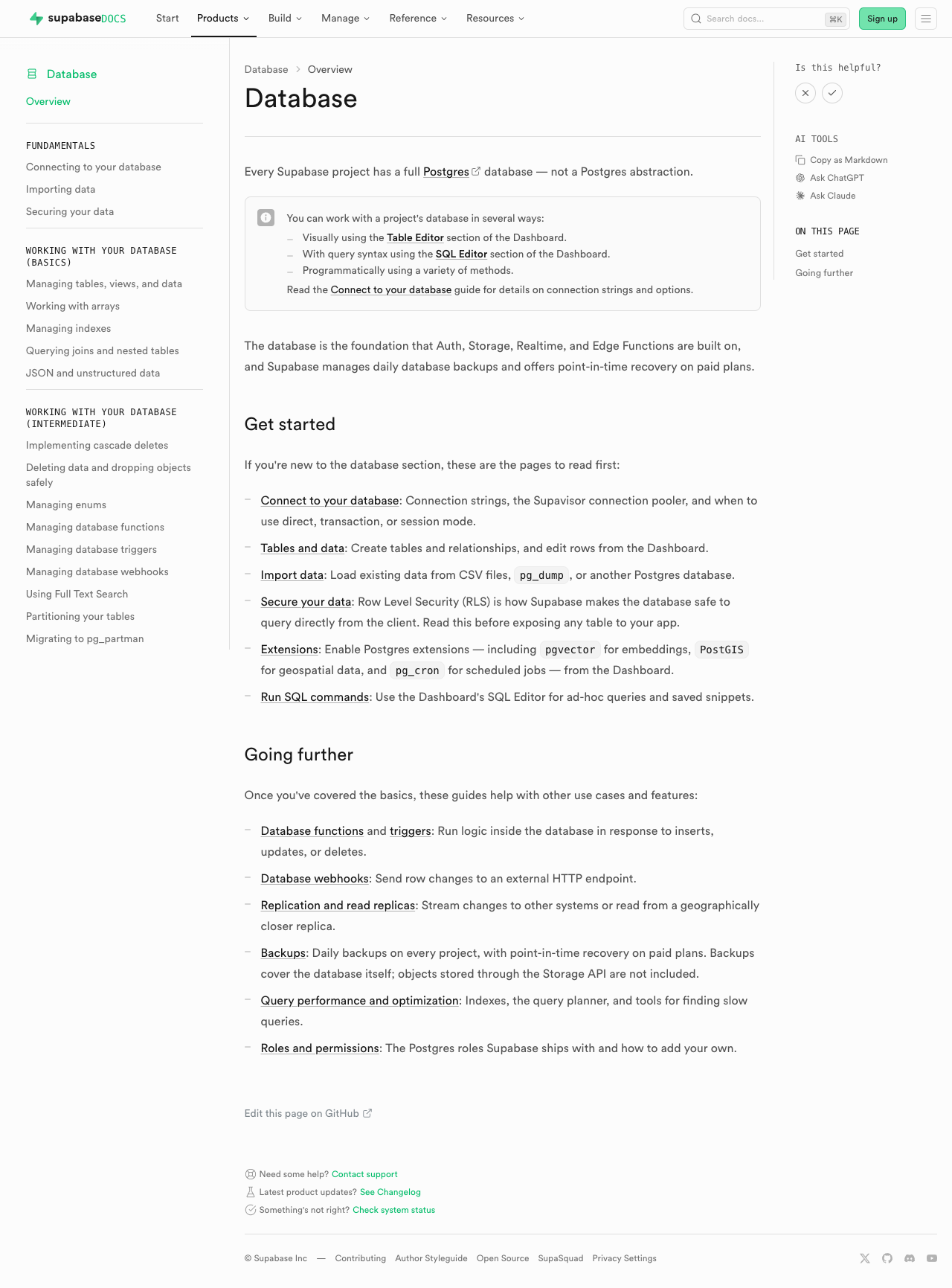 | 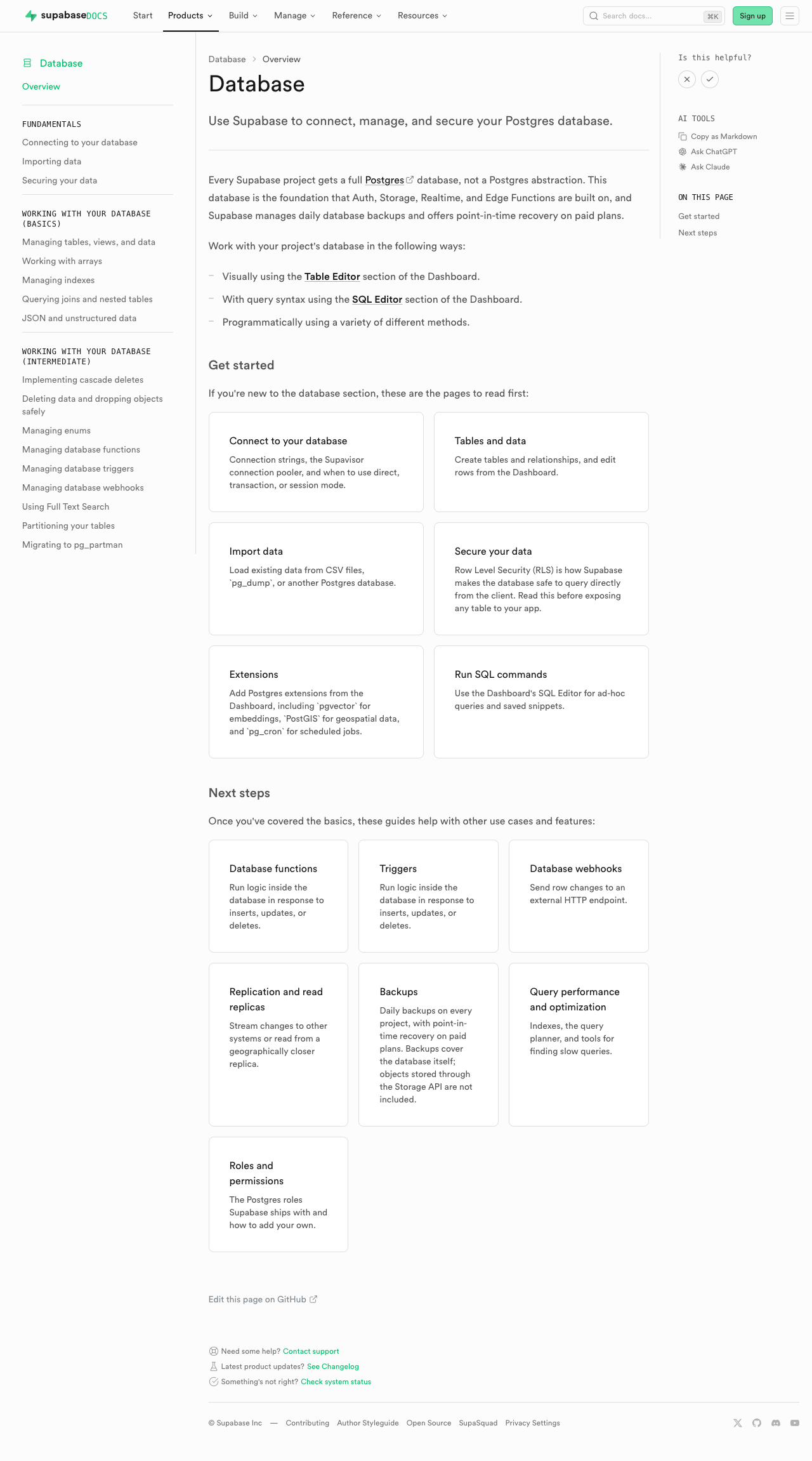 | #### Edge Functions | [Before (production)](https://supabase.com/docs/guides/functions) | [After (preview)](https://docs-git-fork-nrichers-nikrichers-docs-1032-sta-e2a8cb-supabase.vercel.app/docs/guides/functions) | | -------------------------------------------------------------------------------------------------------------------------------------------- | -------------------------------------------------------------------------------------------------------------------------------------------- | | 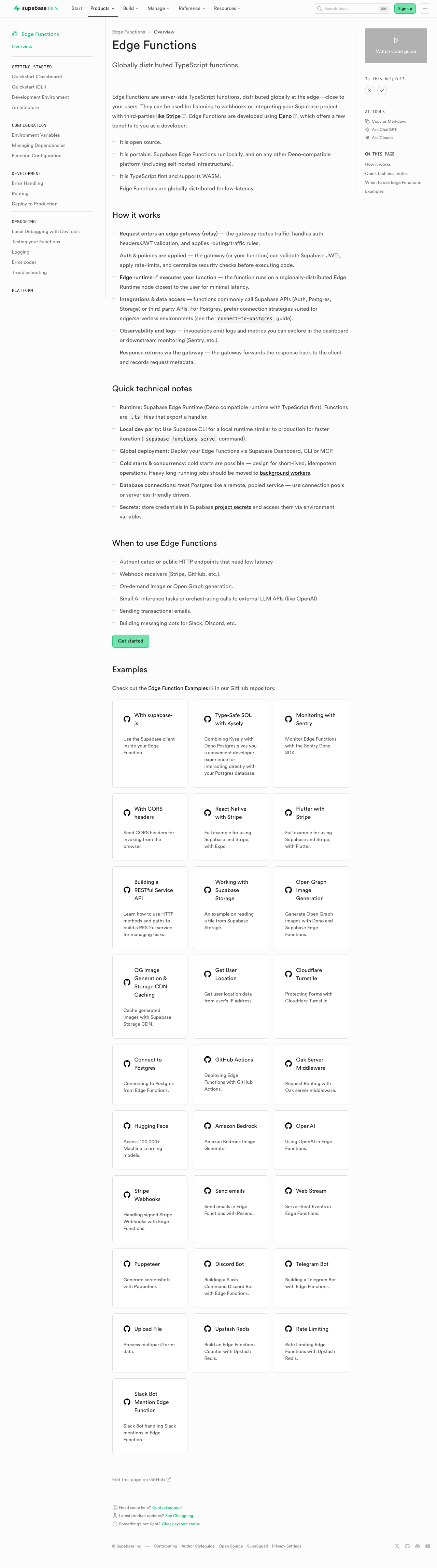 | 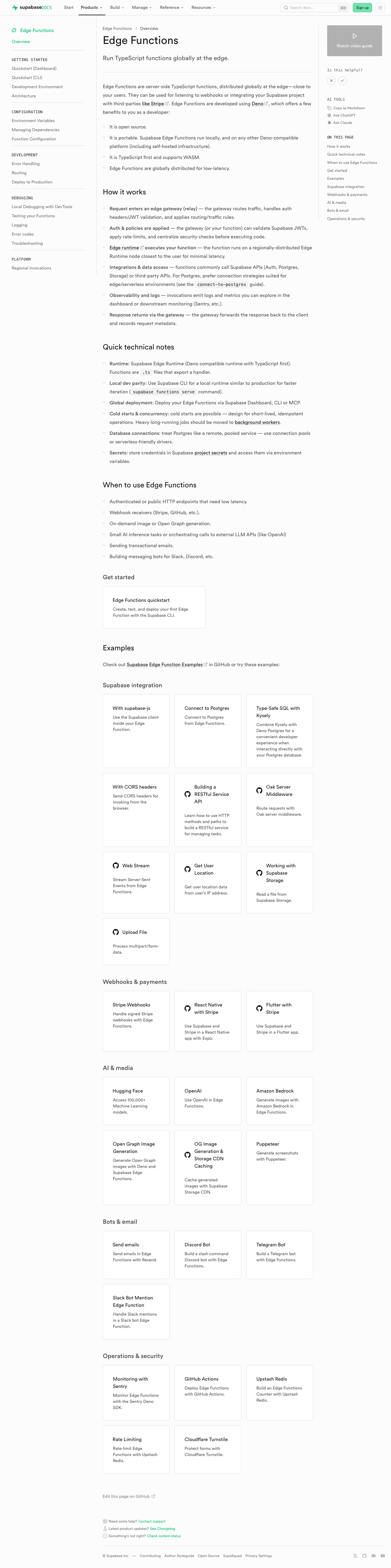 | #### Storage | [Before (production)](https://supabase.com/docs/guides/storage) | [After (preview)](https://docs-git-fork-nrichers-nikrichers-docs-1032-sta-e2a8cb-supabase.vercel.app/docs/guides/storage) | | ---------------------------------------------------------------------------------------------------------------------------------------- | ---------------------------------------------------------------------------------------------------------------------------------------- | | 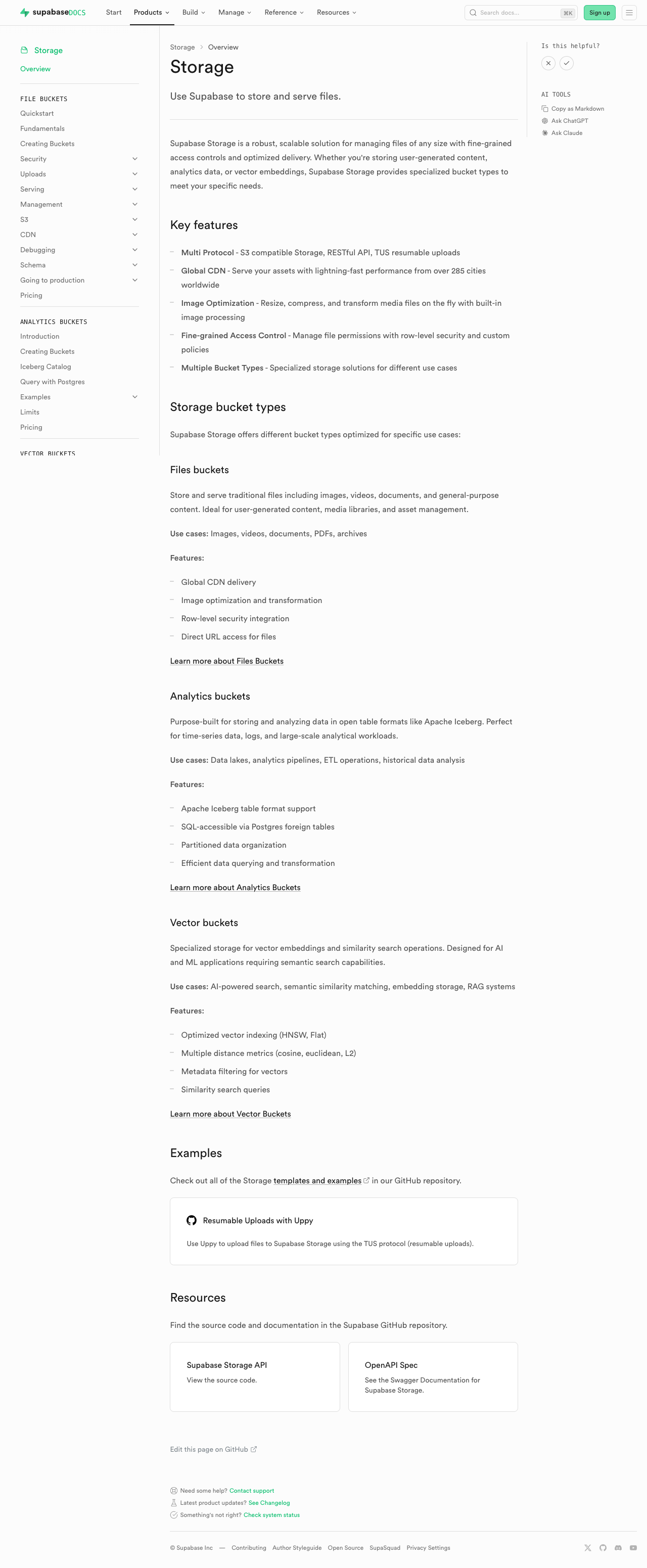 | 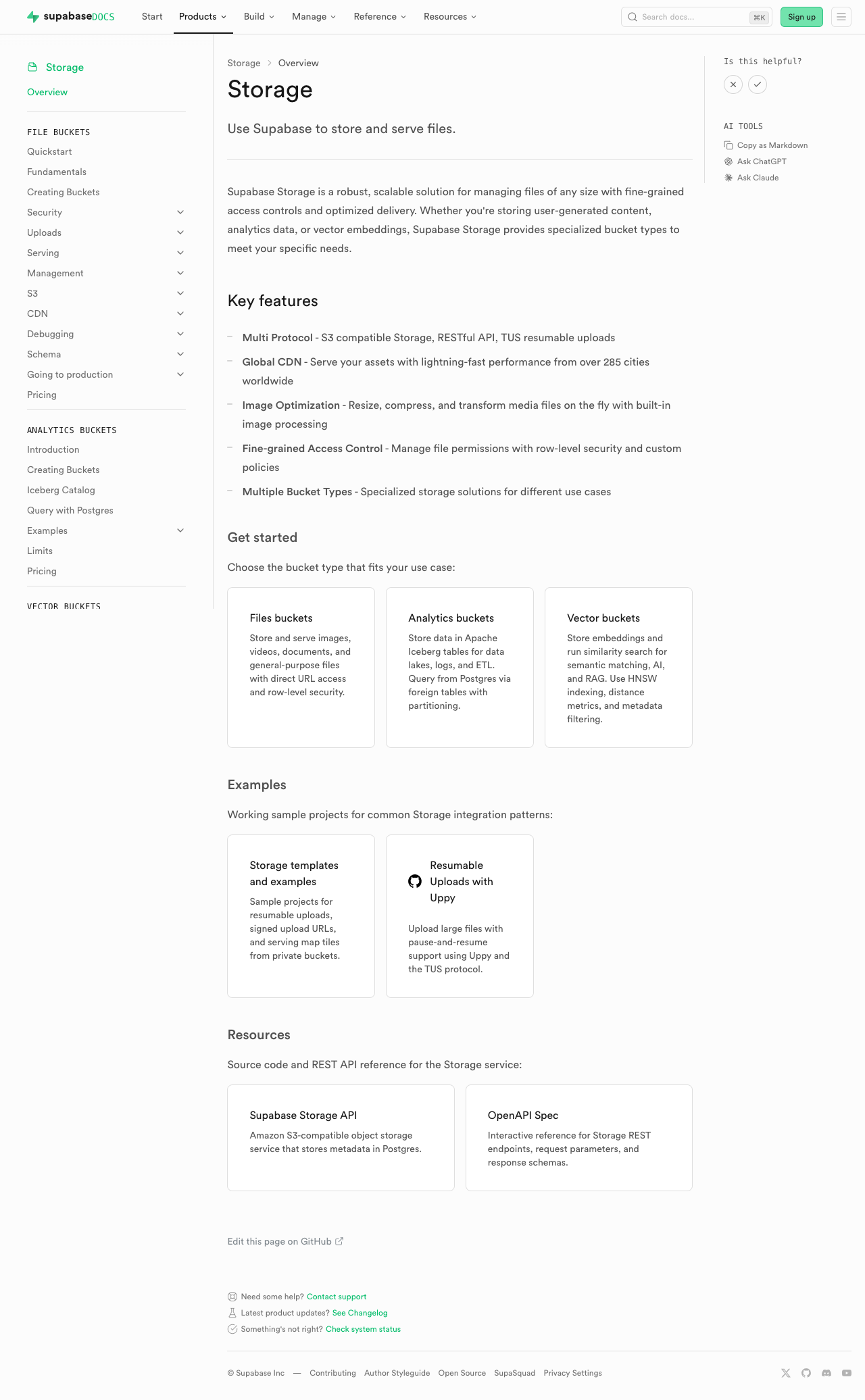 | #### Realtime | [Before (production)](https://supabase.com/docs/guides/realtime) | [After (preview)](https://docs-git-fork-nrichers-nikrichers-docs-1032-sta-e2a8cb-supabase.vercel.app/docs/guides/realtime) | | ------------------------------------------------------------------------------------------------------------------------------------------- | ------------------------------------------------------------------------------------------------------------------------------------------- | | 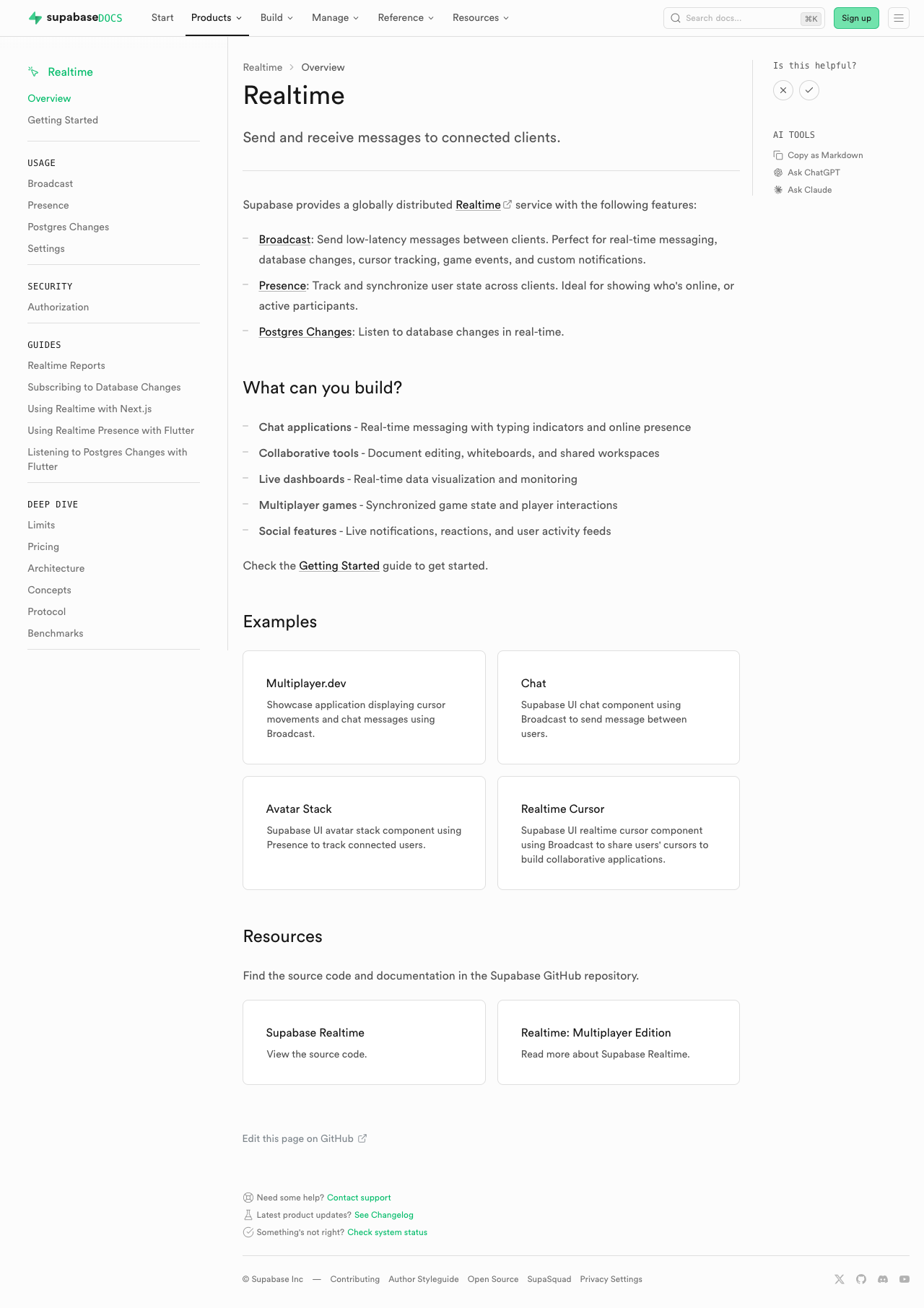 | 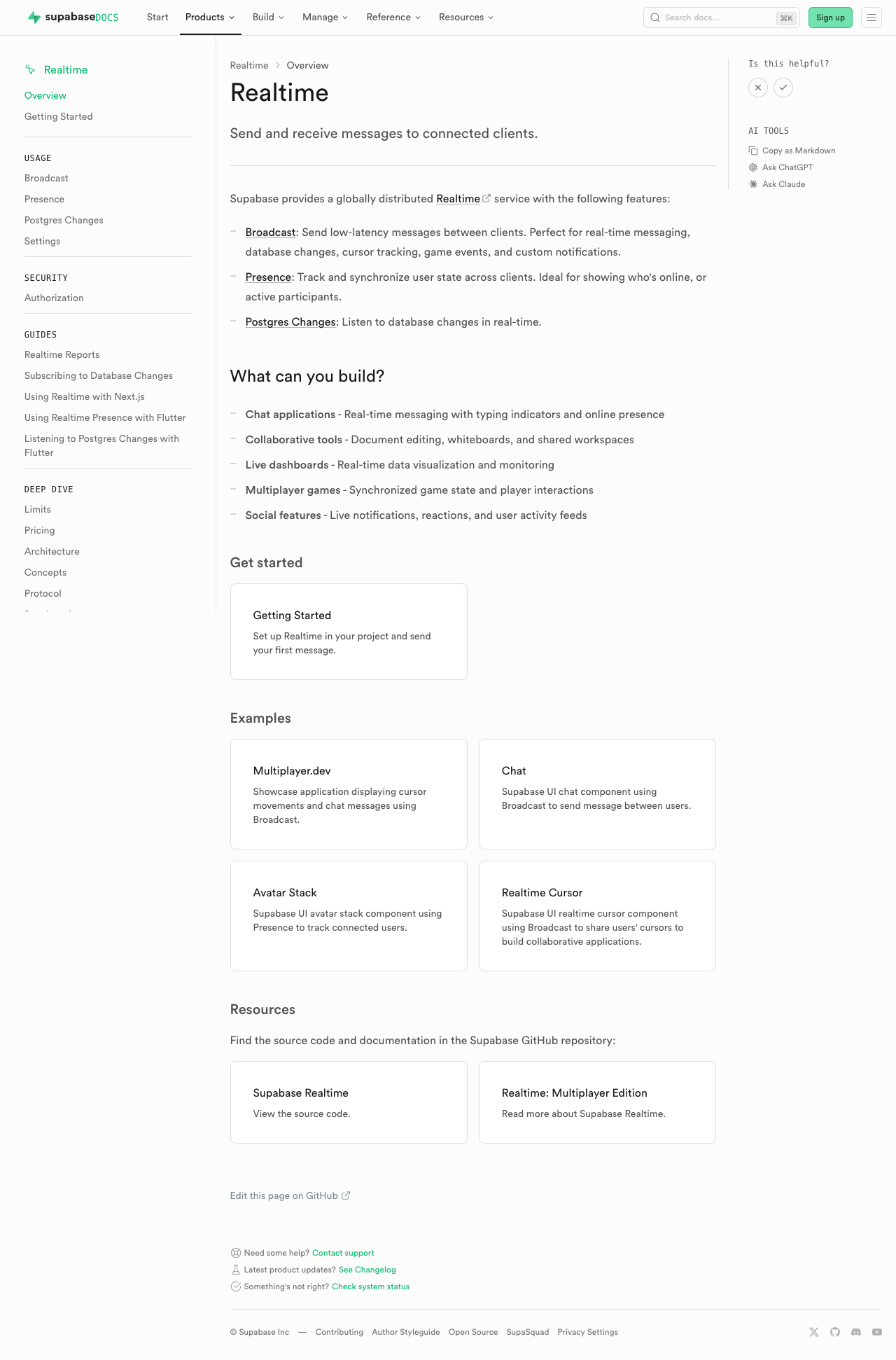 | #### Getting Started (partial migration for demoing) | [Before (production)](https://supabase.com/docs/guides/getting-started) | [After (preview)](https://docs-git-fork-nrichers-nikrichers-docs-1032-sta-e2a8cb-supabase.vercel.app/docs/guides/getting-started) | | ------------------------------------------------------------------------------------------------------------------------------------------------------ | ------------------------------------------------------------------------------------------------------------------------------------------------------ | | 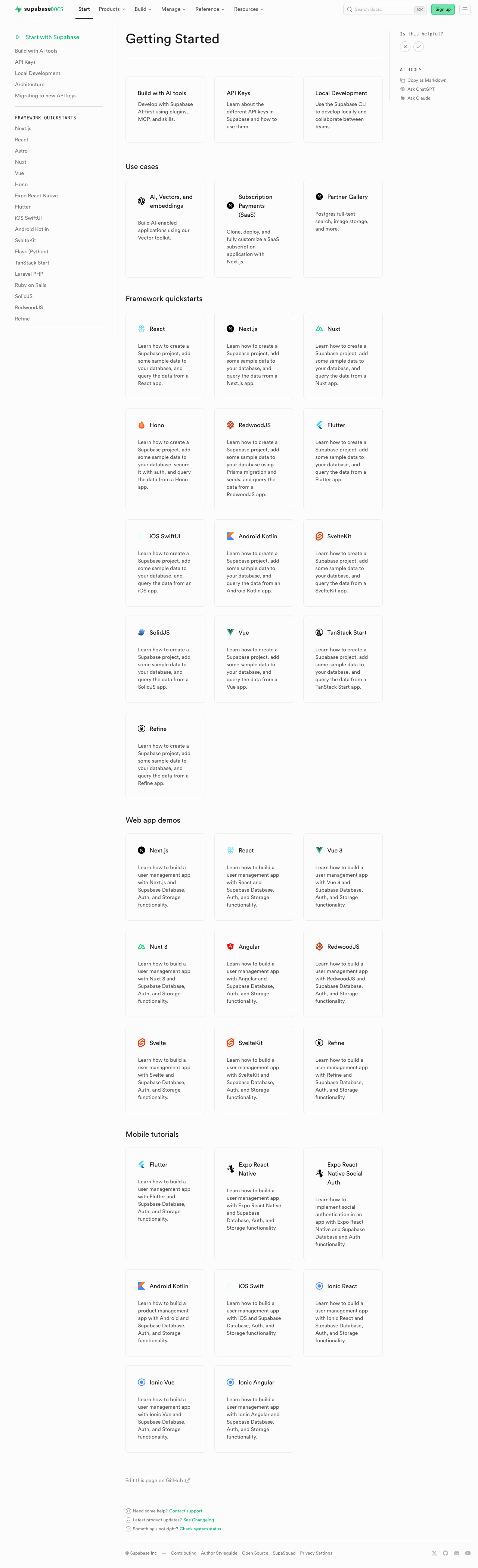 | 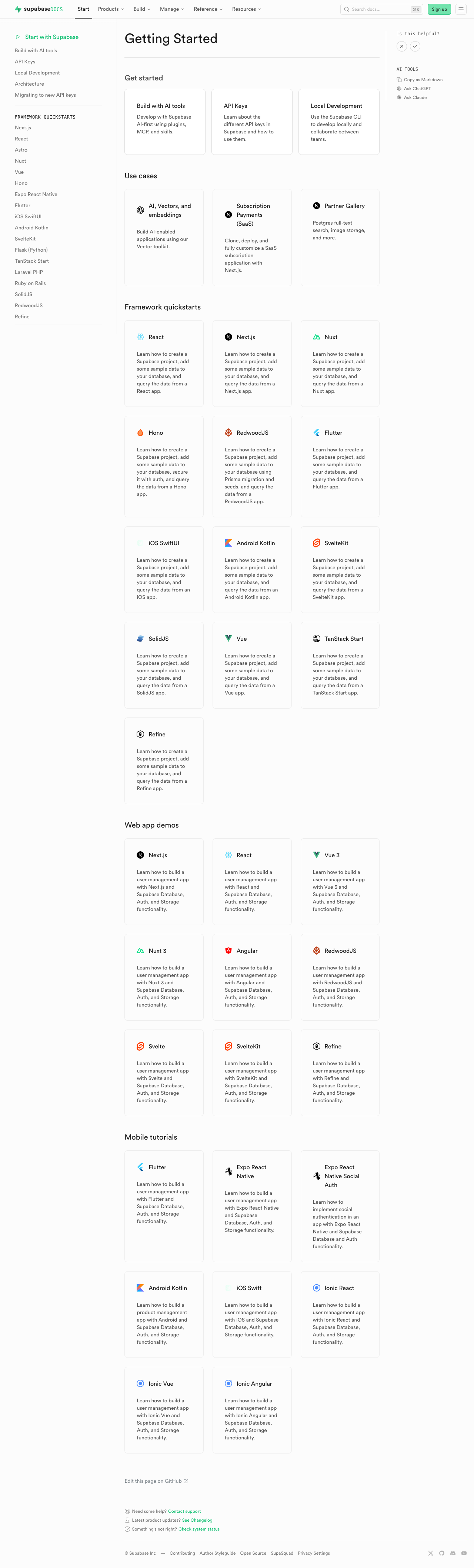 | ### Test plan - [ ] Visually verify migrated pages render correctly: - [ ] `/guides/auth` — grid "Get started", conditional pricing list, grid "Next steps" - [ ] `/guides/database/overview` — get started + next steps listings - [ ] `/guides/getting-started` — top 3-column grid - [ ] `/guides/functions` — get started + example listings - [ ] `/guides/storage` — get started, examples, resources listings - [ ] `/guides/realtime` — get started, examples, resources listings - [ ] Confirm listings render at explicit page positions - [ ] Click a content listing link and verify `docs_content_listing_clicked` fires in PostHog with expected properties (the new `listingId` is the namespaced kebab-case id, e.g. `storage-get-started`) - [ ] Build docs and confirm `.md` alternate output includes listing sections at component placement (e.g. `public/markdown/guides/storage.md`) - [ ] Run unit tests: `pnpm test:local lib/content-listings.test.ts` in `apps/docs` ## Summary by CodeRabbit ## Release Notes * **New Features** * Introduced a standardized content listings system for organizing related guides and resources. * Content listings now support both grid and list layouts for consistent presentation. * Added click telemetry for content listing interactions. * **Documentation** * Updated authentication, database, functions, getting started, realtime, and storage guide pages to use the new content listing components. * Improved MDX structure examples and listing markup formatting in contributor documentation. <!-- end of auto-generated comment: release notes by coderabbit.ai --> <!-- This is an auto-generated comment: release notes by coderabbit.ai --> ## Summary by CodeRabbit ## Release Notes * **New Features** * Introduced a new content listings component for displaying guide content in list and grid layouts across documentation pages. * Added telemetry tracking for content listing interactions to measure user engagement. * **Documentation** * Updated guide pages (Authentication, Database, Functions, Storage, Realtime, Getting Started) to use the new listings layout. * Added contribution guidelines for creating and managing content listings in documentation. * **Tests** * Added comprehensive test coverage for content listings validation, serialization, and rendering. <!-- end of auto-generated comment: release notes by coderabbit.ai --> --------- Co-authored-by: Nik Richers <nik@validmind.ai> Co-authored-by: Jeremias Menichelli <jmenichelli@gmail.com>












403 lines
17 KiB
Markdown
403 lines
17 KiB
Markdown
# Contributing to Supabase docs
|
|
|
|
Our docs help developers to get started and keep succeeding with Supabase. We welcome contributions from everyone.
|
|
|
|
If you'd like to contribute, see our list of [recommended issues](https://github.com/supabase/supabase/issues?q=is%3Aopen+is%3Aissue+label%3Adocumentation+label%3A%22help+wanted%22). We also welcome you to open a PR or a new issue with your question.
|
|
|
|
Here are some general guidelines on writing docs for Supabase.
|
|
|
|
## General principles
|
|
|
|
Docs should be helpful, quick to read, and easy to understand. We have an audience of global readers who speak different native languages.
|
|
|
|
To make docs as clear as possible:
|
|
|
|
- Write for the user. Think about what task they want to complete by reading your doc. Tell them what, and only what, they need to know.
|
|
- Write like you talk. Use words and sentences that sound natural when speaking. Cut unnecessary words. Read your writing out loud to help you choose the clearest and simplest phrases.
|
|
- Each paragraph should have one topic only. Start a new paragraph whenever you change the topic. Don't worry about paragraphs being too short.
|
|
- Avoid using idioms and colloquialisms, such as `piece of cake`. These phrases are often specific to a region or culture.
|
|
- Refer to the reader as `you`. Don't use `we` to refer to the reader. Use `we` only to refer to the Supabase team.
|
|
|
|
## Document types
|
|
|
|
Supabase docs contain 4 types of documents. Before you start writing, think about what type of doc you need.
|
|
|
|
### Explainers
|
|
|
|
Explainers help the reader to learn a topic. They are conceptual and mostly prose-based. They can include:
|
|
|
|
- A description of _what_ a feature is
|
|
- Some reasons _why_ it is useful
|
|
- Some examples of _when_ to use it
|
|
- A high-level explanation of _how_ it works
|
|
|
|
They shouldn't include:
|
|
|
|
- Instructions on how to use it
|
|
|
|
### Tutorials
|
|
|
|
Tutorials are goal-oriented. They help a reader to finish a large, complex goal, such as setting up a web app that uses multiple Supabase features.
|
|
|
|
Tutorials mix prose explanations with procedures (lists of steps for the reader to follow). They provide context for why certain instructions are given.
|
|
|
|
For inspiration, see [an example of a tutorial](https://supabase.com/docs/guides/getting-started/tutorials/with-nextjs).
|
|
|
|
### Guides
|
|
|
|
Guides are also goal-oriented, but they focus on shorter, more targeted tasks. For example, a guide might explain how to set up user login for an app.
|
|
|
|
Guides contain mostly procedures. Think of an instruction manual for building a desk: it's a list of concise steps that the user can go through quickly.
|
|
|
|
For inspiration, see [an example of a guide](https://supabase.com/docs/guides/auth/auth-email).
|
|
|
|
### Reference
|
|
|
|
References are factual and to the point. Think of dictionary entries.
|
|
|
|
They should include:
|
|
|
|
- Function parameters
|
|
- Return types
|
|
- Code samples
|
|
- Warnings for critical errors (for example, missteps that can cause data loss)
|
|
|
|
They shouldn't include:
|
|
|
|
- Explanations of the context for a feature
|
|
- Examples of use cases
|
|
- Multi-step instructions
|
|
|
|
## Repo organization
|
|
|
|
Most docs pages are contained in the `apps/docs/content` directory. Some docs sections are federated from other repositories, for example [`pg_graphql`](https://github.com/supabase/pg_graphql/tree/master/docs). Reference docs are generated from spec files in the `spec` directory.
|
|
|
|
You can usually identify a federated or reference doc because it uses a Next.js dynamic route (for example, `[[...slug]].tsx`). Look for the spec file import or the repo definition to find the content location.
|
|
|
|
Example spec file import:
|
|
|
|
```js
|
|
import specFile from '~/spec/transforms/analytics_v0_openapi_deparsed.json' with { type: 'json' }
|
|
```
|
|
|
|
Example repo definition:
|
|
|
|
```js
|
|
const org = 'supabase'
|
|
const repo = 'pg_graphql'
|
|
const branch = 'master'
|
|
const docsDir = 'docs'
|
|
const externalSite = 'https://supabase.github.io/pg_graphql'
|
|
```
|
|
|
|
Check the sections for [guide structure](#guide-structure) and [reference structure](#reference-structure) to learn more about the file structures.
|
|
|
|
## Guide structure
|
|
|
|
The Supabase docs use [MDX](https://mdxjs.com/). Guides are written in unstructured prose as MDX documents.
|
|
|
|
Adding a new guide requires:
|
|
|
|
- YAML frontmatter
|
|
- A navigation entry (in a separate file)
|
|
|
|
Frontmatter looks like this. `title` is mandatory. There are also optional properties that you can use to control the page display, including `subtitle`, `tocVideo`, and `hideToc`.
|
|
|
|
```yaml
|
|
---
|
|
title: How to connect to Supabase
|
|
hideToc: true
|
|
---
|
|
```
|
|
|
|
The navigation is defined in [`NavigationMenu.constants.ts`](https://github.com/supabase/supabase/blob/master/apps/docs/components/Navigation/NavigationMenu/NavigationMenu.constants.ts).
|
|
|
|
Add an entry with the `name`, `url`, and (optional) `icon` for your page.
|
|
|
|
## Reference structure
|
|
|
|
Reference docs are produced from the reference specs and library source code. A common spec file contains shared function and endpoint definitions, and library-specific spec files contain further details.
|
|
|
|
### Common spec file
|
|
|
|
Each type of library (for example, language SDK or CLI) has a common spec file. For example, see the [spec file for the language SDKs](https://github.com/supabase/supabase/blob/master/apps/docs/spec/common-client-libs-sections.json). This file contains definitions for the common SDK functions:
|
|
|
|
- **id** - Identifies the function
|
|
- **title** - Human-readable title
|
|
- **slug** - URL slug
|
|
- **product** - Supabase product that owns the function. For example, database operations are owned by `database`, and auth functions are owned by`auth`
|
|
- **type** - `function` for a structured function definition or `markdown` for a prose explainer section.
|
|
|
|
To add a new function, manually add an entry to this common file.
|
|
|
|
### Specific spec file
|
|
|
|
Each library also has its own spec file containing library-specific details. For example, see the [JavaScript SDK spec file](https://github.com/supabase/supabase/blob/master/apps/docs/spec/supabase_js_v2.yml).
|
|
|
|
The functions listed in this file match the ones defined in the common spec file.
|
|
|
|
Each function contains a description, code examples, and optional notes. The parameters are pulled from the source code via the `$ref` property, which references a function definition in the source code repo. These references are pulled down and transformed using commands in the spec [Makefile](https://github.com/supabase/supabase/blob/master/apps/docs/spec/Makefile). Unless you're a library maintainer, you don't need to worry about this.
|
|
|
|
If you're a library maintainer, follow these steps when updating function parameters or return values:
|
|
|
|
1. Get your changes merged to `master` in your library
|
|
2. This will kick off an action that automatically updates the spec file in the library's `gh-pages` branch
|
|
3. Run `make` in `/spec` of the `supabase/supabase` repo. This will regenerate all of the `tsdoc` files that the docs site uses
|
|
4. You should now see the changes you've made in the docs site locally
|
|
|
|
## Content reuse
|
|
|
|
If you copy the same content multiple times across different files, create a **partial** for content reuse instead. Partials are MDX files contained in [`apps/docs/content/_partials`](https://github.com/supabase/supabase/tree/master/apps/docs/content/_partials). They contain reusable snippets that can be inserted in multiple pages. For example, you can create a partial to define a common setup step for a group of tutorials.
|
|
|
|
To use a partial, import it into your MDX file. You can also set up a partial to automatically import by including it in the `components` within [`apps/docs/features/docs/MdxBase.shared.tsx`](https://github.com/supabase/supabase/blob/master/apps/docs/features/docs/MdxBase.shared.tsx).
|
|
|
|
## Components and elements
|
|
|
|
Docs include normal Markdown elements such as lists, and custom components such as admonitions (callouts).
|
|
|
|
Here are some guidelines for using elements:
|
|
|
|
### Admonitions
|
|
|
|
Admonitions (or callouts) draw reader attention to an important point or an aside. They highlight important information, but get less effective if they're overused.
|
|
|
|
Use admonitions sparingly. Don't stack them on top of each other.
|
|
|
|
Choose the appropriate `type` for your admonition:
|
|
|
|
- `danger` to warn the user about any missteps that could cause data loss or data leaks
|
|
- `deprecation` to notify the user about features that are (or will soon be) deprecated
|
|
- `caution` to warn about anything that could cause a bug or serious user inconvenience
|
|
- `tip` to point out helpful but optional actions
|
|
- `note` for anything else
|
|
|
|
```
|
|
<Admonition type="note" title="Optional title">
|
|
|
|
Your content here
|
|
|
|
</Admonition>
|
|
```
|
|
|
|
### Blockquotes
|
|
|
|
Don't use blockquotes.
|
|
|
|
### Code blocks
|
|
|
|
Keep code lines short to avoid scrolling. For example, you can split long shell commands with `\`.
|
|
|
|
- **JavaScript/TypeScript**
|
|
|
|
The `supabase` repo uses Prettier, which also formats JS/TS in code blocks. Your PR is blocked from merging if the Prettier check fails. Ensure that your code blocks are formatted by running `npm run format`, or by setting up auto-formatting in your IDE.
|
|
|
|
- **SQL**
|
|
|
|
Prefer lowercase for SQL. For example, `select * from table` rather than `SELECT * FROM table`.
|
|
|
|
Optionally specify a filename for the codeblock by including it after the opening backticks and language specifier:
|
|
|
|
````md
|
|
```ts environment.ts
|
|
|
|
```
|
|
````
|
|
|
|
Optionally highlight lines by using `mark=${lineNumber}`.
|
|
|
|
````md
|
|
```js mark=12:13
|
|
|
|
```
|
|
````
|
|
|
|
### Content listings
|
|
|
|
Overview and index pages use a single `<ContentListings id="..." />` component for curated link sections such as "Get started", "Next steps", "Examples", or "Resources". Refer to [`storage.data.ts`](data/content-listings/storage.data.ts) and [`storage.mdx`](content/guides/storage.mdx) for a full example.
|
|
|
|
**Prompt to add content listings:**
|
|
|
|
```text
|
|
Add a content listing block for [TOPIC] / [SECTION] (for example, Storage / Examples).
|
|
Follow CONTRIBUTING § Content listings in apps/docs.
|
|
Copy structure from `storageGetStarted` in apps/docs/data/content-listings/storage.data.ts.
|
|
Pick a globally-unique kebab-case id like `[topic]-[section]`.
|
|
Run `pnpm test:local lib/content-listings.test.ts` from apps/docs.
|
|
```
|
|
|
|
**Manually add content listings:**
|
|
|
|
1. Add or update a `ContentListingGroup` export in [`data/content-listings/[topic].data.ts`](data/content-listings/). The `id` field must be globally unique across all listing groups (e.g. `storage-get-started`, not just `get-started`) — it is used both as the lookup key and as the telemetry `listingId`.
|
|
2. Place the component inline in guide MDX, for example `<ContentListings id="storage-get-started" />`. Use a partial only when the block is reused or gated with `$Show` at the partial level.
|
|
3. Run `pnpm test:local lib/content-listings.test.ts` from `apps/docs`.
|
|
|
|
Code snippets for manually adding content listings are available in [`.vscode/content-listing.code-snippets`](../../.vscode/content-listing.code-snippets): `cl-data` (data export with namespaced id) and `cl-inline` (MDX component).
|
|
|
|
|
|
### Footnotes
|
|
|
|
Don't use footnotes.
|
|
|
|
### Graphs
|
|
|
|
Render diagrams (flowcharts, sequence diagrams, entity-relationship diagrams, etc.) by writing a fenced code block with `mermaid` as the language. The MDX renderer routes these blocks through the shared `Mermaid` component, so theming follows light/dark mode automatically.
|
|
|
|
For the full list of supported diagram types and their syntax, see the [official Mermaid diagram reference](https://mermaid.js.org/intro/syntax-reference.html).
|
|
|
|
Sequence diagram:
|
|
|
|
````mdx
|
|
```mermaid
|
|
sequenceDiagram
|
|
participant User
|
|
participant Browser
|
|
participant Supabase
|
|
|
|
User->>Browser: Clicks "Sign in"
|
|
Browser->>Supabase: Request authorization
|
|
Supabase->>Browser: Return token
|
|
```
|
|
````
|
|
|
|
Flowchart (`flowchart` accepts a direction like `LR`, `TD`, etc.):
|
|
|
|
````mdx
|
|
```mermaid
|
|
flowchart LR
|
|
A["content/**/*.md"] -->|Contentlayer| B[MDX]
|
|
B --> C[Rehype]
|
|
C -->|Our Plugin| D[SVG]
|
|
D -->|Base64| E[Embedded Images]
|
|
```
|
|
````
|
|
|
|
A few tips:
|
|
|
|
- Use the standard Mermaid diagram keywords (`sequenceDiagram`, `flowchart`, `erDiagram`, etc.) on the first line of the block.
|
|
- Keep diagrams focused on a single flow or concept. If a diagram gets too dense, split it into multiple smaller diagrams.
|
|
- Wrap node labels that contain special characters (`*`, `/`, spaces, punctuation) in double quotes, for example `A["content/**/*.md"]`.
|
|
- Don't hardcode colors. The component themes the diagram automatically so it matches both light and dark mode.
|
|
- Use diagrams to support the prose, not replace it. Explain the key takeaway in text near the diagram.
|
|
|
|
### Images
|
|
|
|
Images are uploaded in the `apps/docs/public/img` folder.
|
|
|
|
For vector illustrations, use `svg`. For screenshots and non-vector graphics, use `png`. (These are automatically converted to `webp` for supported browsers.)
|
|
|
|
Redact any sensitive information, such as API keys.
|
|
|
|
### Links
|
|
|
|
Link text should be descriptive. The reader should understand where the link goes from reading the link text alone. This is important for accessibility. For example, don't use `here` as link text.
|
|
|
|
But link text shouldn't be too long. Use the shortest part of the link that is descriptive enough. For example, `see the [reference section](/link)` rather than `[see the reference section](/link)`.
|
|
|
|
Use relative links when linking within the `supabase.com` domain. For example, `[link to another page in Supabase docs](/docs/guides/getting-started)`.
|
|
|
|
### Lists
|
|
|
|
Use ordered lists for steps that must be taken one after the other. Use unordered lists when order doesn't matter.
|
|
|
|
Use Arabic numerals (`1`, `2`, `3`) for ordered lists and dashes (`-`) for unordered lists.
|
|
|
|
Don't nest lists more than two deep.
|
|
|
|
```md
|
|
1. List item
|
|
2. List item
|
|
1. List item
|
|
2. List item
|
|
3. List item
|
|
- List item
|
|
- List item
|
|
<!-- DON'T ADD ANOTHER LEVEL OF NESTING -->
|
|
- Overly nested list item
|
|
```
|
|
|
|
### Tabs
|
|
|
|
Use tabs to provide alternative instructions for different platforms or languages.
|
|
|
|
The `queryGroup` param is optional. It lets you link directly to a tab by using the query group as a query param in the URL, for example: `https://supabase.com/docs/my-page?packagemanager=ts`
|
|
|
|
```
|
|
<Tabs
|
|
scrollable
|
|
size="small"
|
|
type="underlined"
|
|
defaultActiveId="npm"
|
|
queryGroup="packagemanager"
|
|
>
|
|
<TabPanel id="npm" label="npm">
|
|
|
|
// ...
|
|
|
|
</TabPanel>
|
|
<TabPanel id="yarn" label="Yarn">
|
|
|
|
// ...
|
|
|
|
</TabPanel>
|
|
</Tabs>
|
|
```
|
|
|
|
### Videos
|
|
|
|
Include videos as TOC (Table of Contents) videos rather than putting them in the main text.
|
|
|
|
You can define a TOC video in the page frontmatter:
|
|
|
|
```yaml
|
|
---
|
|
tocVideo: 'rzglqRdZUQE',
|
|
---
|
|
```
|
|
|
|
## Styling, formatting, and grammar
|
|
|
|
Don't worry too much about grammar rules. Grammar is useful if, and only if, it makes your writing clearer. For example, you can use sentence fragments if they're self-explanatory.
|
|
|
|
That said, a few rules help keep the docs concise, consistent, and clear:
|
|
|
|
- Format headings in sentence case. Capitalize the first word and any proper nouns. All other words are lowercase. For example, `Set up authentication` rather than `Set Up Authentication`.
|
|
- Use the Oxford comma (a comma before the `and` that marks the last item in a list). For example, `realtime, database, and authentication` rather than `realtime, database and authentication`.
|
|
- Use the present tense as much as possible. For example, `the AI assistant answers your question` rather than `the AI assistant will answer your question`.
|
|
|
|
## Word usage and spelling
|
|
|
|
Use American English. If in doubt, consult the [Merriam-Webster dictionary](https://www.merriam-webster.com/).
|
|
|
|
Here are some exceptions and Supabase-specific guidelines.
|
|
|
|
### General word usage
|
|
|
|
- **Filler words**: You can often make your writing more concise by removing these words. (Some of these words can also sound patronizing.) Most filler, marketing, and vague-verb phrases are flagged by `supa-mdx-lint` as warnings, with suggested alternatives where a direct replacement exists. Run `pnpm lint:mdx` in `apps/docs` to check your changes.
|
|
- Actually
|
|
- Easy, easily
|
|
- Just
|
|
- Let's
|
|
- Please
|
|
- Simple, simply
|
|
- **UI elements**
|
|
- Buttons are `click`ed.
|
|
- Checkboxes are `select`ed.
|
|
- Toggles are `enable`d and `disable`d.
|
|
- Labels of UI elements are bolded. For example, `Click **Confirm**.`
|
|
|
|
### Word list
|
|
|
|
- `Frontend` isn't hyphenated (not `front-end`).
|
|
- `Backend` isn't hyphenated (not `back-end`).
|
|
- `Login` is a noun. `Log in` is a verb.
|
|
- `Postgres` is capitalized, except in code, and used instead of `PostgreSQL`.
|
|
- `Setup` is a noun. `Set up` is a verb.
|
|
- `Supabase` is capitalized (not `supabase`), except in code.
|
|
- `Supabase Platform` is in title case (not `Supabase platform`).
|
|
|
|
## Search
|
|
|
|
Search is handled using a Supabase instance. During CI, [a script](https://github.com/supabase/supabase/blob/master/apps/docs/scripts/search/generate-embeddings.ts) aggregates all content sources (for example, guides, reference docs, etc), indexes them using OpenAI embeddings, and stores them in a Supabase database.
|
|
|
|
Search uses a hybrid of native Postgres FTS and embedding similarity search based on [`pgvector`](https://github.com/pgvector/pgvector). At runtime, a PostgREST call triggers the RPC that runs the weighted FTS search, and an [Edge Function](https://github.com/supabase/supabase/tree/master/supabase/functions) is executed to perform the embedding search.
|